

Sluggish
On Pacific Sea Lemons

I keep wanting to write a bestiary post about tidepooling. The creature I saw on April 29th (-2.35 ft low tide!) that I have not written about was the Pacific sea lemon, Peltodoris nobilis, and life is giving me lemons right now. That cliché’est of clichés.
And then I didn’t write the post, though I did dive into research on sea lemons, and nudibranchs in general, the group to which sea lemons belong.
In addition to departures of colleagues to early retirements (scared off by threatened cuts), and the very real possibility of job loss imposed by an administration wielding power like a blunt, oversized scythe, the leadership in my own agency targeted my little lab to be preemptively cut. They specifically said they’d cut our facility in order to keep our jobs (the math doesn’t math for someone whose job is very much based on running the facility). They succumbed to the temptation of anticipatory compliance, hoping that by harming one of their own limbs, the rest would be safer from deranged scythe-wielders. Silly leadership, no one is safe.
Since the April low tides, the moon waxed and waned and the lowest tide of the year, possibly the lowest in eighteen years, though I have not confirmed it, was upon us last week on May 28th (-2.65 feet). The surf already erases any evidence of this lowest of lows. But I was there, and I have evidence. I am determined to have this to say for myself at the end of 2025: I tidepooled.
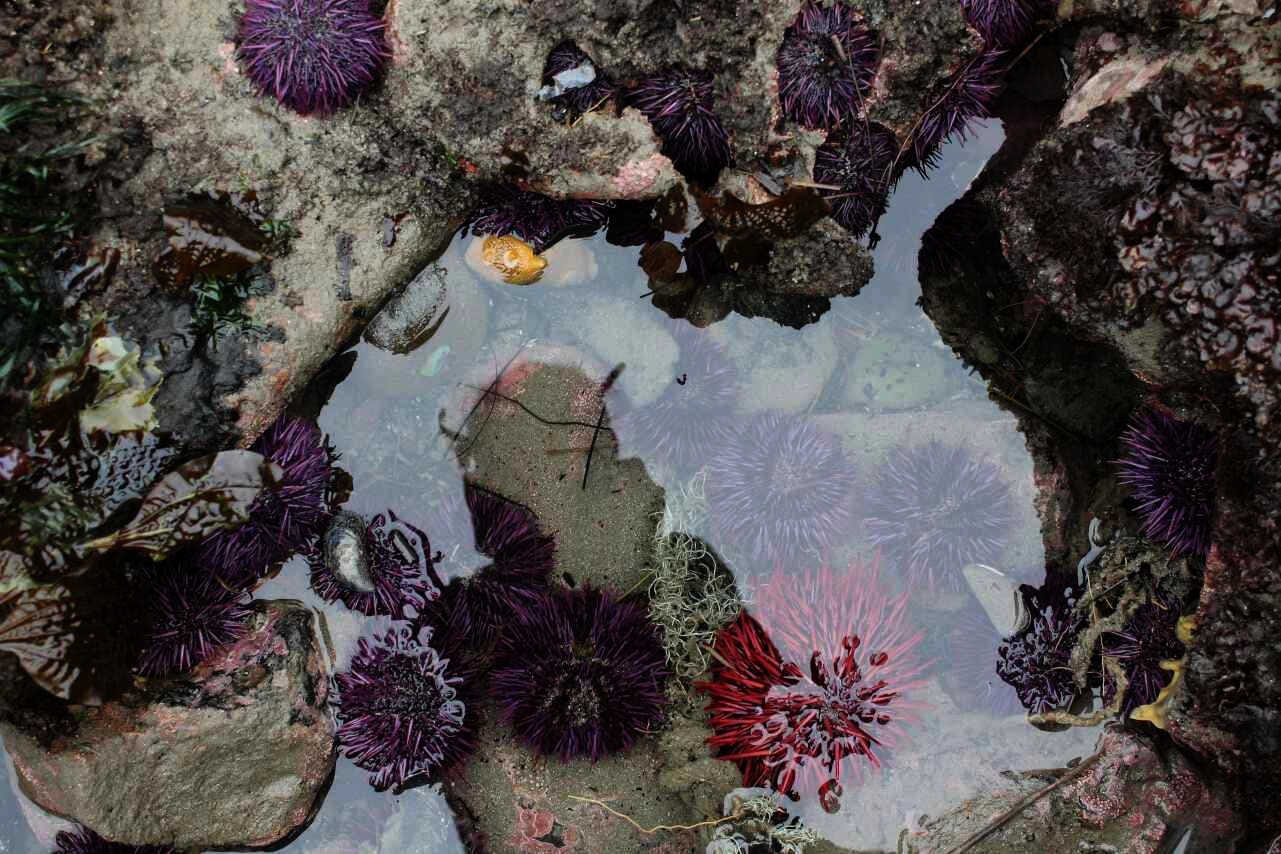
I decided to travel farther and visit a new-to-me tidepooling spot recommended by a friend. It doesn’t beat my favorite spot, but I wondered if I’d find a new critter for the bestiary. Take a wild guess what I did find.
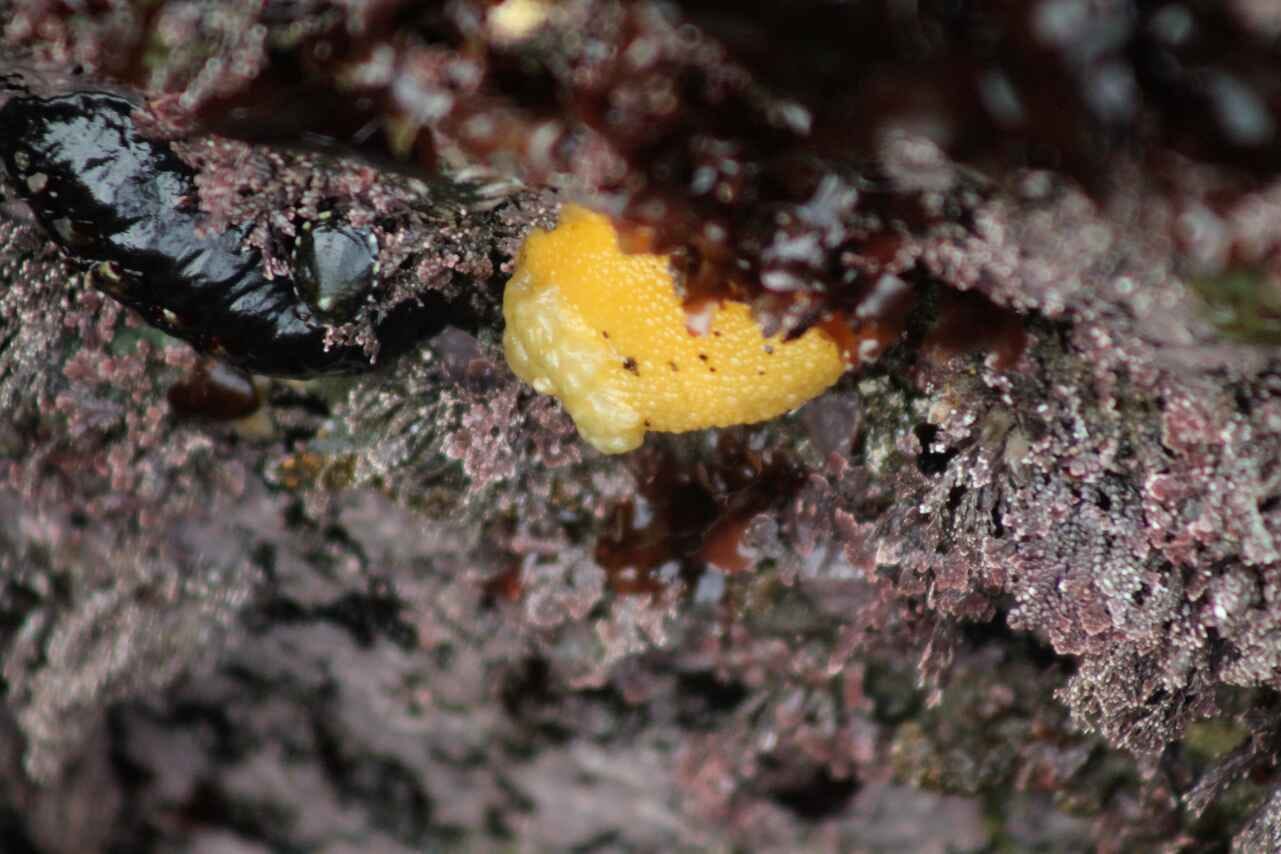
So many sea lemons. At least five. Haha, I get the message, universe.
When the announcement was made to our lab group, I sat in stunned silence, absorbing the shock of closing down a bustling seawater lab with unparalleled capabilities at raising and caring for arctic fish for cutting edge research. I finally spoke to ask about the timeline. “It’s not a one-day process to kill all the fish and drain all the tanks so if you’d communicate that up the chain, that would be good,” I requested of my supervisor. After he said he would, I left the crowded room in tears. They had welled up behind my tear ducts until “kill all the fish” left my lips, but that was it.
We’re not supposed to talk about this. Even in that moment, in that meeting, a separate observer in my brain watching from above noticed, “this too is writing material.” Having produced a book manuscript based on events that happened during my work as a biologist that I was told to keep silent about, I am learning to recognize the “hey writer” signs without a decade elapsing. I leave names unnamed, of leaders and labs and agencies.
One of my colleagues made art for each of our office doors a while back, with clever puns for our work personalities like The Codfather, Cod the Builder, and Codzilla. Me? I’m Fairy Codmother. I am fish mom.
I’m a contradiction. I’m both very sensitive to fish death, and also not that precious about fish death. I insist on death with dignity and minimal pain. I strive for every fish who dies at my hands to have provided a wealth of information that will improve their species’ continued survival. I’ve seen fish killed in bad, slow, painful ways. I know how to kill a fish the right and gentlest way, and I’m very good at doing this. Which makes me sound like an evil villain, and it’s not wrong to think that. If I talked numbers you’d probably unsubscribe from my newsletter, and I have a million misgivings about how research is conducted. I’m the one who brought many of our lab’s current fish into the world, kept them alive, blended their precisely balanced diets, vacuumed their tanks, strip-spawned their eggs and milt, incubated their embryos, hatched their larvae, grew them up. I’m the last one who wants to kill them. And, I would rather be the one taking their lives when the order is given so that I can prevent bad deaths.
My son graduates from high school tomorrow, and he is communicating little with me, which is a whole other story and complicated grief. The mom lemons are abundant atop the lab lemons.
Writing has been more sluggish, but after last week’s tidepool session, I sat down to write. Nudibranch movements are also slow, and they do not apologize.
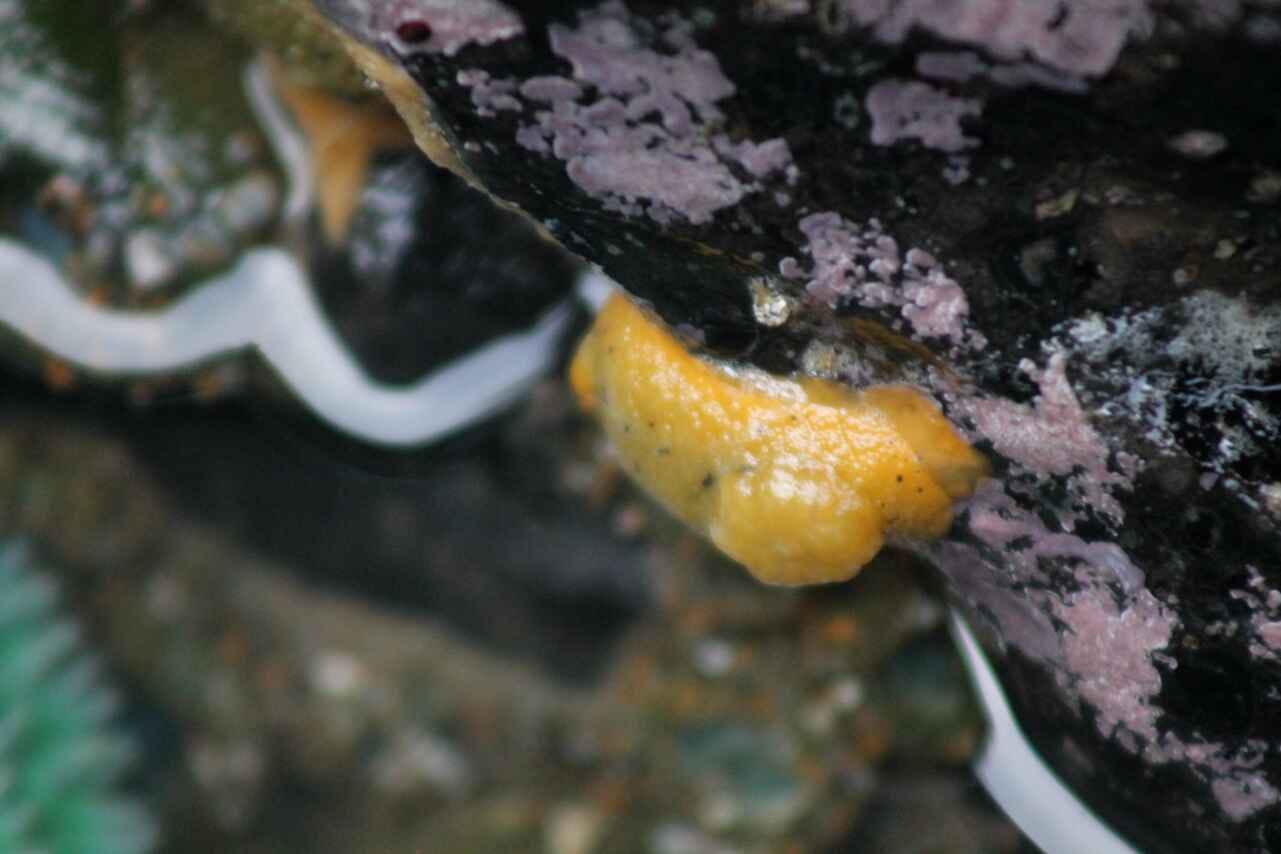
A sea lemon carries a fleshy rosette on their back where their gills are housed. Not all nudibranch species do breathing the same way. But all of them also absorb oxygen through the rest of their external surface. Open and porous, their whole body is a sensory receiving system. To be one big ruffly membrane just taking it all in feels relatable.
I’ve been reading along, following the writers I follow, finding new subscriptions and noticing how themes tend to form little herds, trending without trying to. Spring’s juxtaposition of burgeoning vibrancy alongside brutal mortality, the interlocking puzzle pieces of trauma and chronic illness, synchronicities, crows. I stand on the sidelines, not writing. Observing. Absorbing.
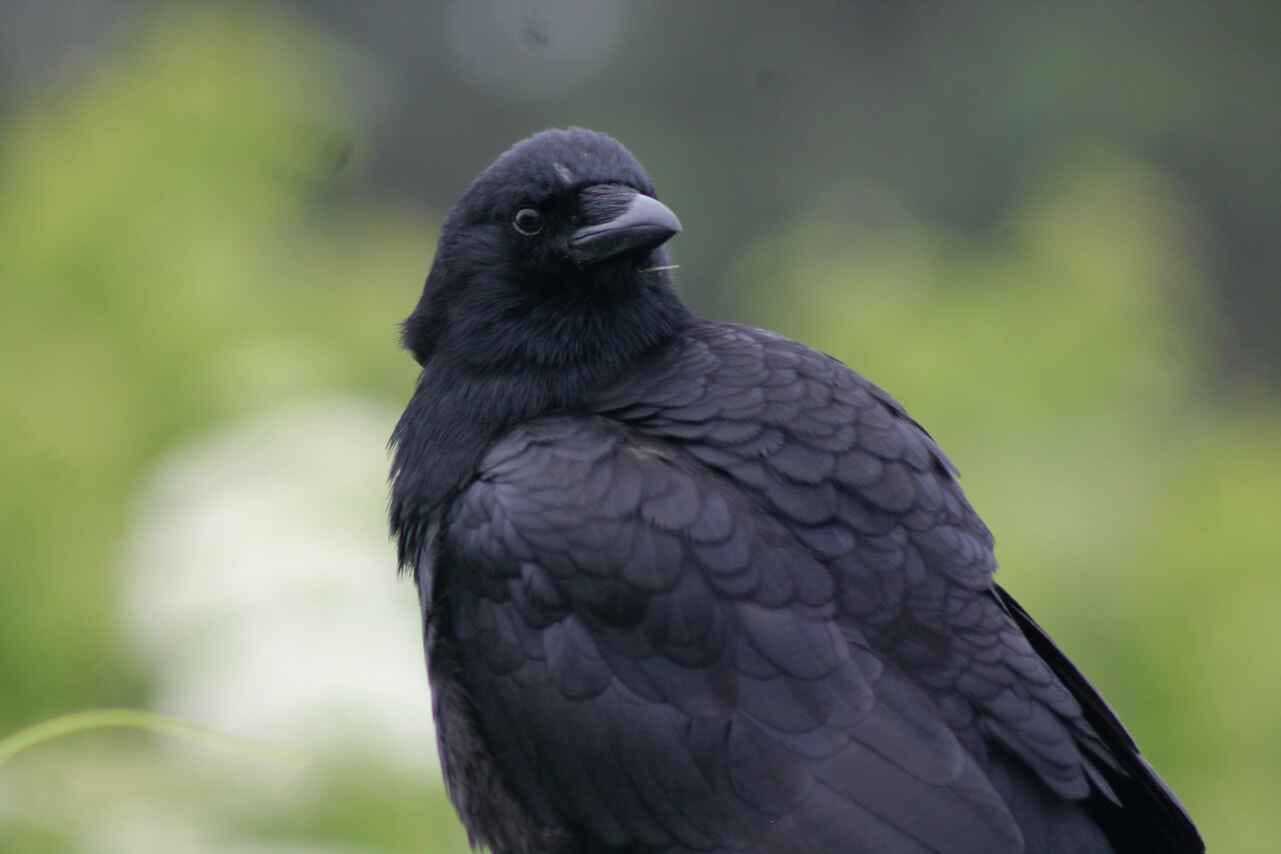
Last Tuesday on the estuary trail at work I saw two tree swallows playing catch with a downy white feather. Lots of nesting boxes are maintained by volunteers along the estuary, and there is a good population of swallows, but I’d never seen this bit of wonder. The pair flew in swooping circles, chattering a chirpy conversation, catching and releasing the curlicue of white. Upon release, the feather hung motionless, defying physics, or obeying it. Then the other swallow snatched it in their beak and spun another circle against the bright, breezy, blue sky, brushed with gauzy strands of cloud with fluff as fine as that feather. Round and round, a feather catching sunbeams, caught and released by tiny beaks.
The themes tossed around by the nature feminists of substack lately feel like this: playful, purposeful collaboration, like a feather snatched mid-soar and released for someone else to carry forward another few feet.
My running 2025 journal document is called “the hellscape.” Positive vibes only, right? In it I document the bleakest work situation in my decades-long marine biology…pursuit…career?...endeavor. At the high point, just two years and eleven months ago, after many years of contract-to-contract hopscotch, I was hired into a “permanent” position. My husband and I closed on our mortgage three months later. Goals with long-term horizons seemed possible. We were middle aged, and finally becoming grownups. Though we may never be able to retire, at least we would have steady work and a humble abode to grow old in together with our cats.
We are tiny hermit crabs playing house at the mercy of forces much greater than ourselves.
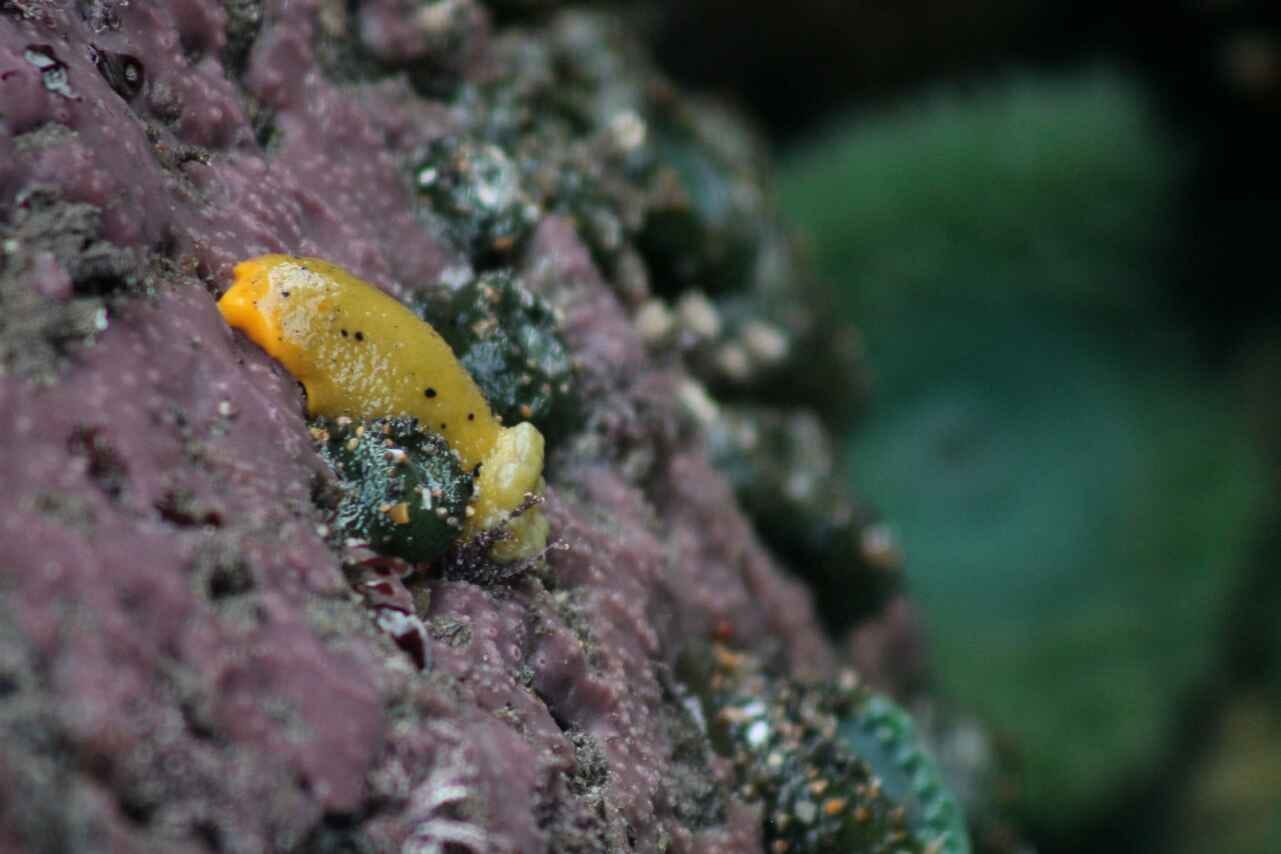
Sea lemons and other nudibranchs are used as research animals. They have a lot of nerve—some of the largest neurons in the animal kingdom. When Eric Kandel began using nudibranchs for neuroscience research, the connectome—the way neurons connect—had only been mapped in a nematode and the fruit fly. But nudibranchs grow neurons throughout their development, up to 10 or 20 thousand of them, and development is when problems with neurology can tend to go awry. Since the numbers of neurons were countable (unlike our hundred billion human ones), and since they are not born with their full set like we are, but continue to grow and develop neural circuitry throughout their lives, nudibranchs are ideal study species.
Reportedly, one of the fundamental questions fueling Eric Kandel’s life of inquiry after he fled Austria as a nine year old in 1939, was how some intellectuals succumbed to supporting Hitler.
I know from firsthand experience that being a research organism means that millions of sea slugs have been caused to be born, and caused to experience pain and die, sacrificed for the pursuit of human knowledge.
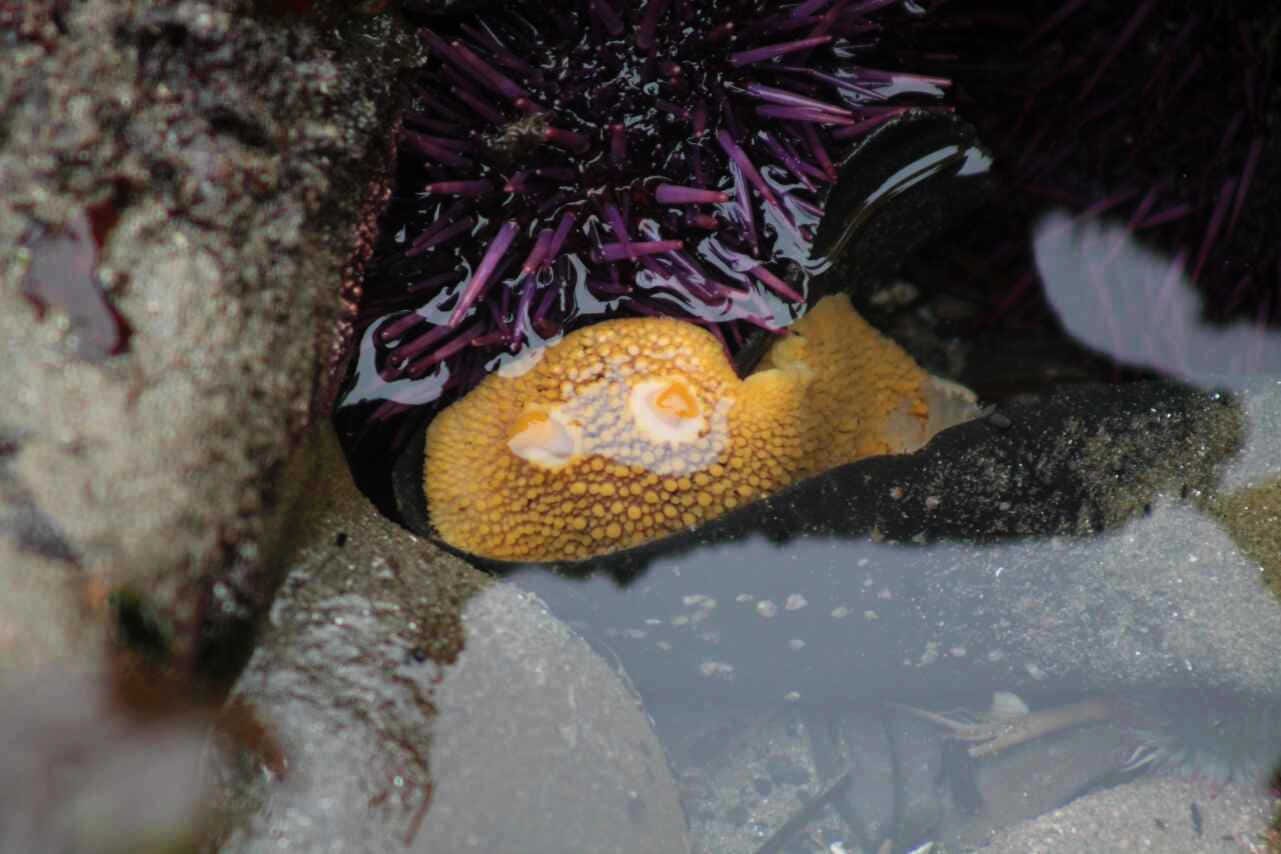
Sea lemons have sensory organs all over the fleshy surface of their bodies. Papillae, pinnae, parapodia, propodia, perfoliate plumes, protective pockets to pull protuberances inside. Photoreceptors allow sea lemons to sense light, and possibly its intensity and movement. Maybe they detect the approach of day or night, or a predator. Maybe they are adept at interpreting shadows.
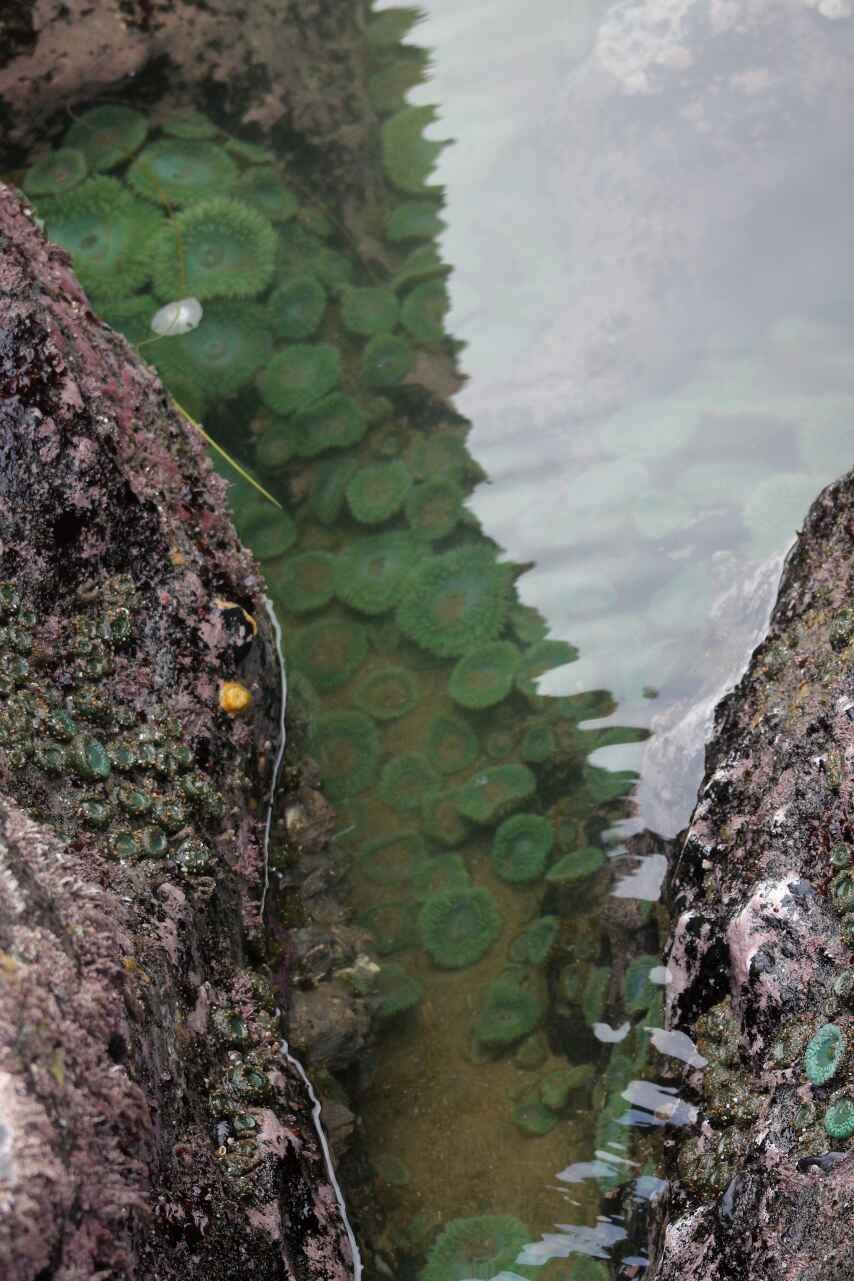
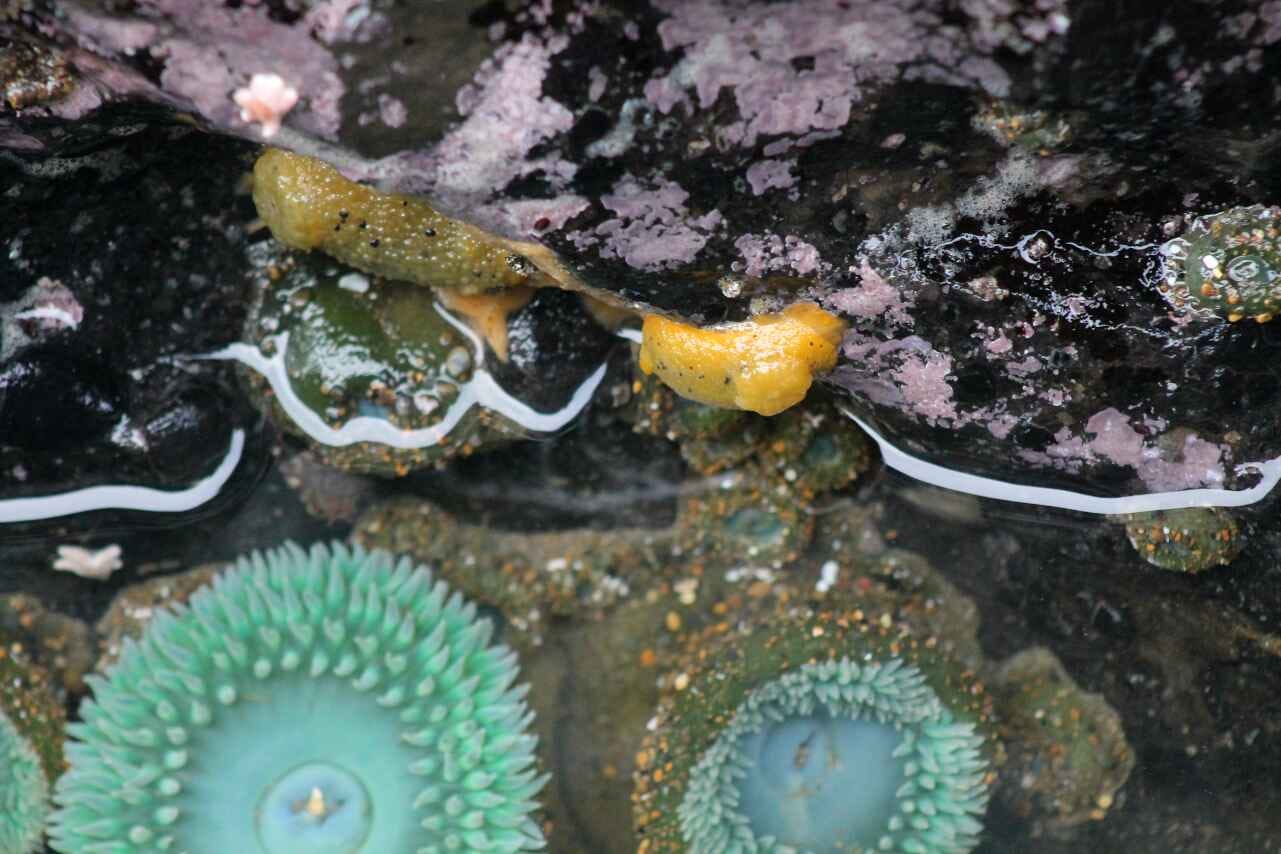
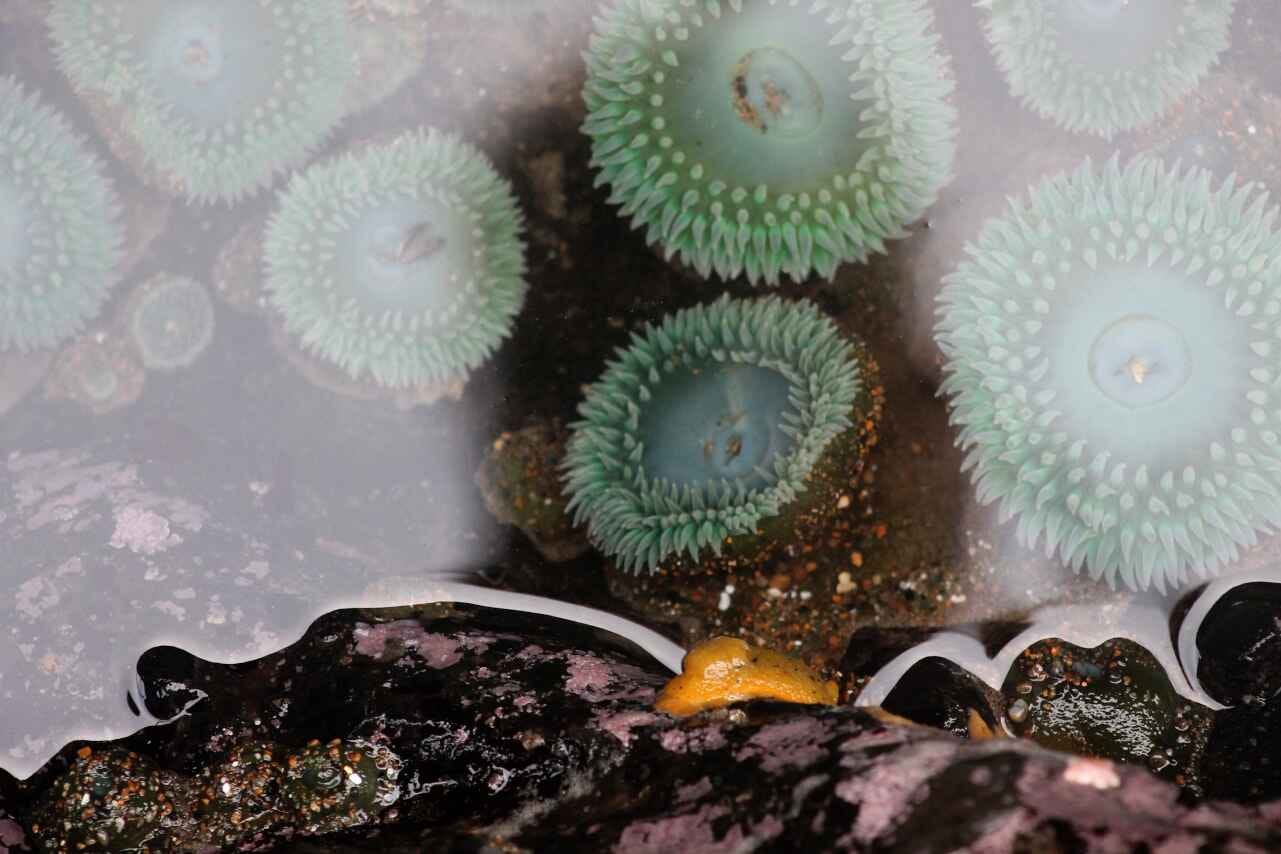
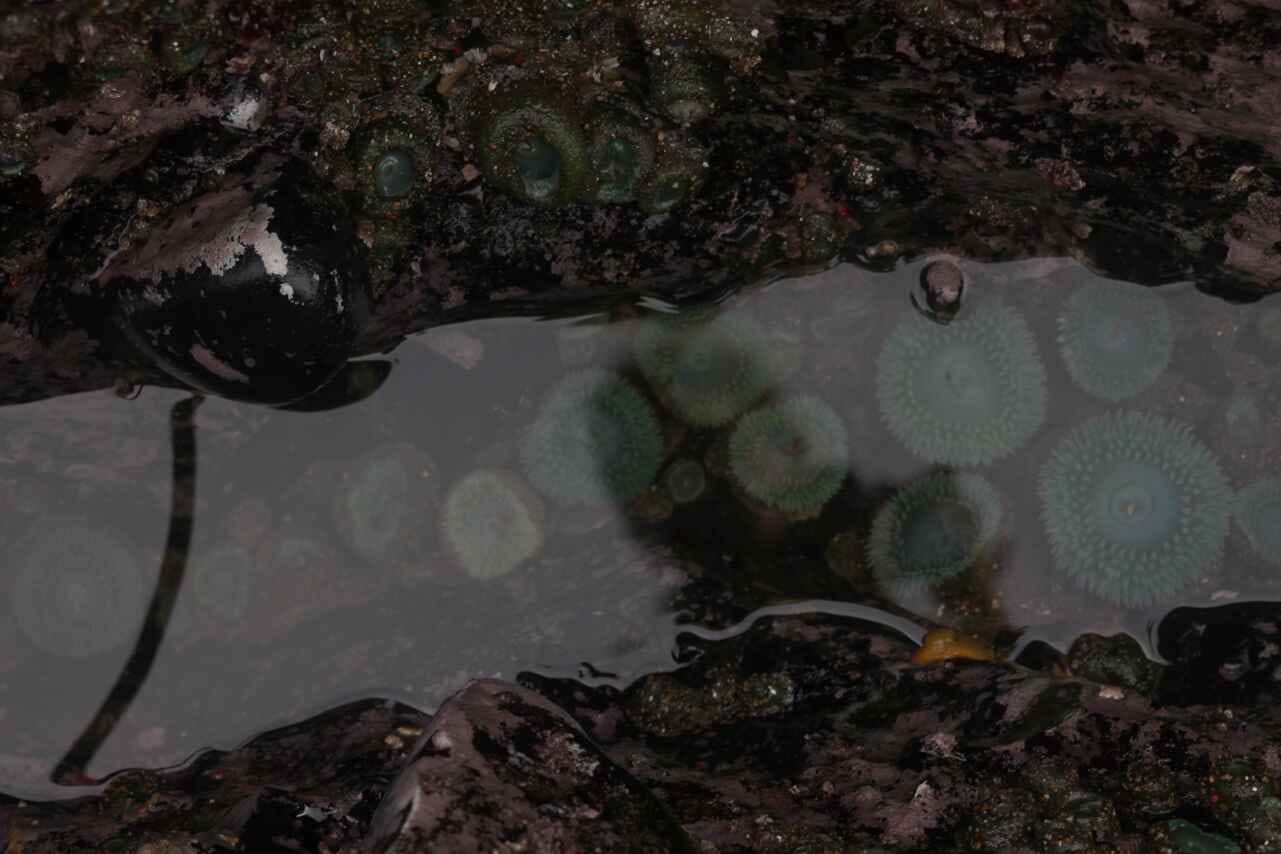
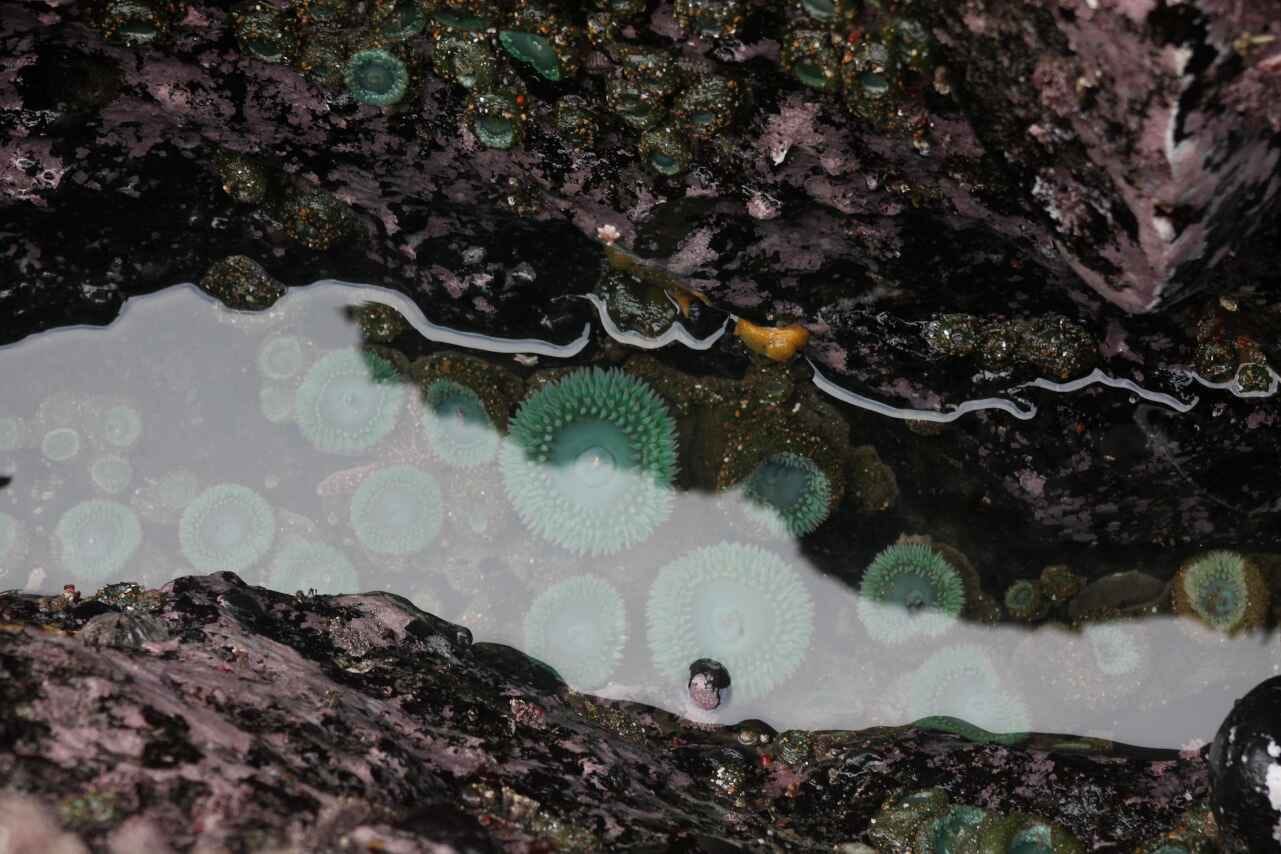
The sea lemons were tucked along a band of the rocky pools just above where all the green sea anemones gathered in their groups. Although anemones can eat creatures larger than themselves, they tend to stay away from nudibranchs. There are even nudibranchs who eat anemones, though the sea lemon prefers a particular sponge for their diet. Some of the fleshy folds of the sea lemon might contain defensive glands that produce chemical deterrents to keep them well defended, though they cannot evade nor have any armor.
Nudibranchs are said to be able to self-decapitate when threatened. They can leave behind almost their entire body, their major organs, their beating heart. They heal their own wounds in days, regrow their bodies in weeks. Maybe our identities do not entirely overlap our physical bodies and what we do.
With so much being taken away, when we’ve lost our former selves, who will we be then? Will we still be us? The sea lemon is suggesting to me that even this can be survived. When I think about this, I know it already in my own survivor’s body. But sometimes a small sea creature can be the messenger I need to remind me of what I already know.
Epilogue: Pacific Sea Lemonade
Not a week after being told our lab was being targeted to shut down, I was told I was added to the list of potential personnel to staff the agency’s groundfish survey. This survey, carried out annually across multiple boats over Alaskan waters to document the status of fish populations, is considered the most direct mandate to our agency by Congress, and will likely be the last thing the scythe-wielders manage to cut. I thought, “I’m being voluntold.” But then I thought, “hold on, I love going to sea.”
In two days, I made a subtle but important shift. A possible three-week stint on a boat this summer could be a burden, but what if it is an opportunity?
“I am not being voluntold, I am pursuing this,” I thought.
In a day, I went from potential backup crew to prime candidate (they needed a female scientist, check, for leg two—the only leg my schedule will accommodate, check), and they’ve been unable to staff boats with the usual crew. So many retired. Volunteers cannot fill berths since their travel expenses can’t be covered under the Scythe wielders’ rules. In no time, I was assigned a berth on a vessel leaving port June 17th.
If the cuts are deep enough to remove major organs, the beating heart, who will I be when I come through this? Maybe, against all odds, I get to be even more myself.
Lovely to hear from you, quite an update! Take care of your heart - that is a lot. I’m glad the fish have a cod mother, even if it is to ease their passing. I’ll look forward to your boat stories.
Love your writing. I think kids act up when they graduate from high school because they are already mourning. They just don't know it. And I think boys do this to their moms more so.